 By Dustin Steerman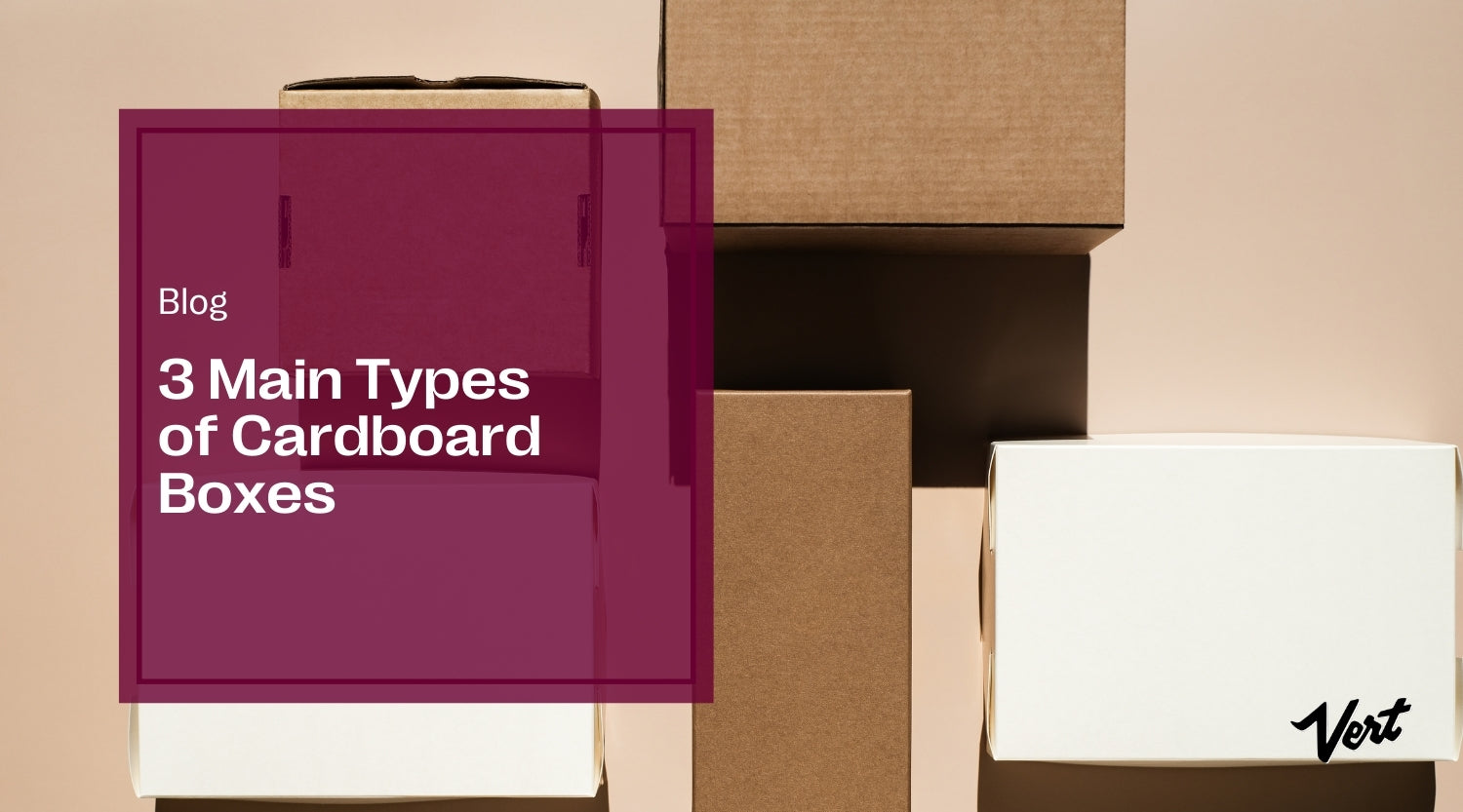
There are many types of cardboard boxes in as many different configurations as you can dream up. However, there are three main types of cardboard material that make up common box styles and configurations. The main types of cardboard used for boxes and packaging are paperboard (used for carton boxes), corrugated (used for corrugated boxes), and chipboard (used for rigid boxes).

The choice of cardboard material depends on what's going in the box and how you want your packaging to function. Whether it's flexibility, strength, padding, or style, one of these types of cardboard box will be perfect for the job.
1. Paperboard Carton Boxes
Carton boxes are made from a single layer of paperboard. It is a thin and lightweight, yet sturdy material.
The best example of a paperboard or carton box is a cereal box that lightly flexes around the cereal inside. The cereal is first placed in a soft, plastic liner that's sealed and puffed up with air or inert gas for freshness and padding.

The cereal then clumps more dramatically at the bottom of the liner once opened, changing where the carton needs to bend around it. The cardboard box holds the cereal expertly, no matter where the bulk of the contents happens to sit.

Folding carton boxes are cost-effective for goods that are lightweight and don't require a lot of protection. They also shine when it comes to intricate items, as the thinner material is easy to fold and tuck tightly together. If you have a specific item you want to protect with folds or tucks, consider custom boxes.
Benefits
- Lightweight: Saving the expense incurred in shipping weight from heavy packaging.
- Thin: More easily fitting a larger volume of packages in the same space and folding neatly and intricately.
- Flexible: Allowing contents to take up the space they need.
- Cost-Effective: Saving expense on packaging where available.
Drawbacks
- Less sturdy against knocks and drops, with corners and tabs denting and bending.
- It can't support much weight either internally or stacked on top.
- Offers little protection to the product inside, making it more suitable for robust products or those with inner packing or lining.
2. Corrugated Boxes
Corrugated boxes are made of corrugated cardboard, a strong material typically featuring one or two fluted layers between thinner layers of cardboard, though more layers are also used as needed. These fluted layers come in different flute grades, or depths, and act as a cushioning for impact. Different flute grades provide different levels of strength, so choose based on your need.
These boxes are ideal for heavy loads and those requiring more protection, as they have a high level of crush resistance and stacking strength, even after being jostled about in transport.

The most common corrugated box styles are corrugated shipping boxes and corrugated cartons (think standard cartons or moving boxes). These boxes are ideal for sending products in the post, as they withstand the pressures of being packed in shipping containers and any rough handling by delivery drivers. This results in the customer's purchase arriving in its original condition.
Benefits
- Strong: Supports heavy loads inside and stacked on top, compared to paperboard cartons.
- Cushioned: Protects the contents inside.
Drawbacks
- Moisture Absorbent: These boxes absorb moisture, making them less structurally sound when wet compared to rigid boxes or hard plastic. Wet boxes also lead to spoiled contents.
- Single Use: These boxes sustain damage easily if punctured, dropped, or subjected to heavy loads, when compared to rigid boxes or hard plastic. Once damaged, they’re no longer structurally sound for repeat use.
3. Rigid Boxes
Rigid boxes are made from chipboard, which is usually 1-4 millimetres thick. They are non-collapsible and sturdy. The chipboard has a wrap on the outside for aesthetics. This wrap is a separate layer of paper that can be textured, smooth, matte, gloss, or anything else. The wrap has the packaging details printed on it. Rigid boxes come in a few standard configurations, including one with a magnetic closure,

a drawer-style with a separate body and outer sleeve, and a two-piece rigid box, with a body and lid. These boxes are often used for luxury items such as phones or jewellery. They not only offer extra protection for fragile items but are also synonymous with style, elegance, and quality.
Benefits
- Strong: Will thoroughly protect the contents.
- Aesthetic: Communicates quality and luxury.
Drawbacks
- Higher Manufacturing Cost: The materials used are more expensive, and each unit is constructed by hand.
- Don’t fold flat: This increases shipping costs and requires more space to store each unit.
- Less Recyclable: The materials used are less easily recycled, increasing waste.
- Longer Lead Times: The hand-assembled nature of these boxes lengthens the amount of lead time.
Importance of Choosing the Right Cardboard Box
Choosing the right cardboard box for the job is imperative to ensure the appropriate amount of protection, function, and style for the product inside. Packaging companies will have a range of standard and custom boxes on offer. They will also have a design team standing by, ready to help you make the best packaging choice for the safety and saleability of your products.
With many types of boxes used in product packaging, knowing the most suitable type for your needs is critical. Box types and packaging designs make a big impact on both shipping safety and consumer experience.
Choosing the Right Cardboard Box
Which box is right for your product? Is it a light paperboard carton box, a strong and cushioned corrugated carton or shipper, or a sturdy and elegant rigid box?

If you're still unsure, contact your packaging company and get their tailored answer to your packaging query. They will advise you on the most functional and aesthetically pleasing packaging solutions for your products.
 By Dustin Steerman
Dustin is a packaging and supply chain entrepreneur with deep experience in print production. From 2017 to 2021, Dustin led the development and scaling of North America’s largest manufacturer of digitally printed pouches. That experience ultimately led to the founding of Vert in 2023. Today, Dustin and his team at Vert leverage their combined expertise in digital packaging and supply chain strategy to help CPG brands launch products faster, navigate packaging complexity, and build supply chains designed for speed, flexibility, and healthy margins.